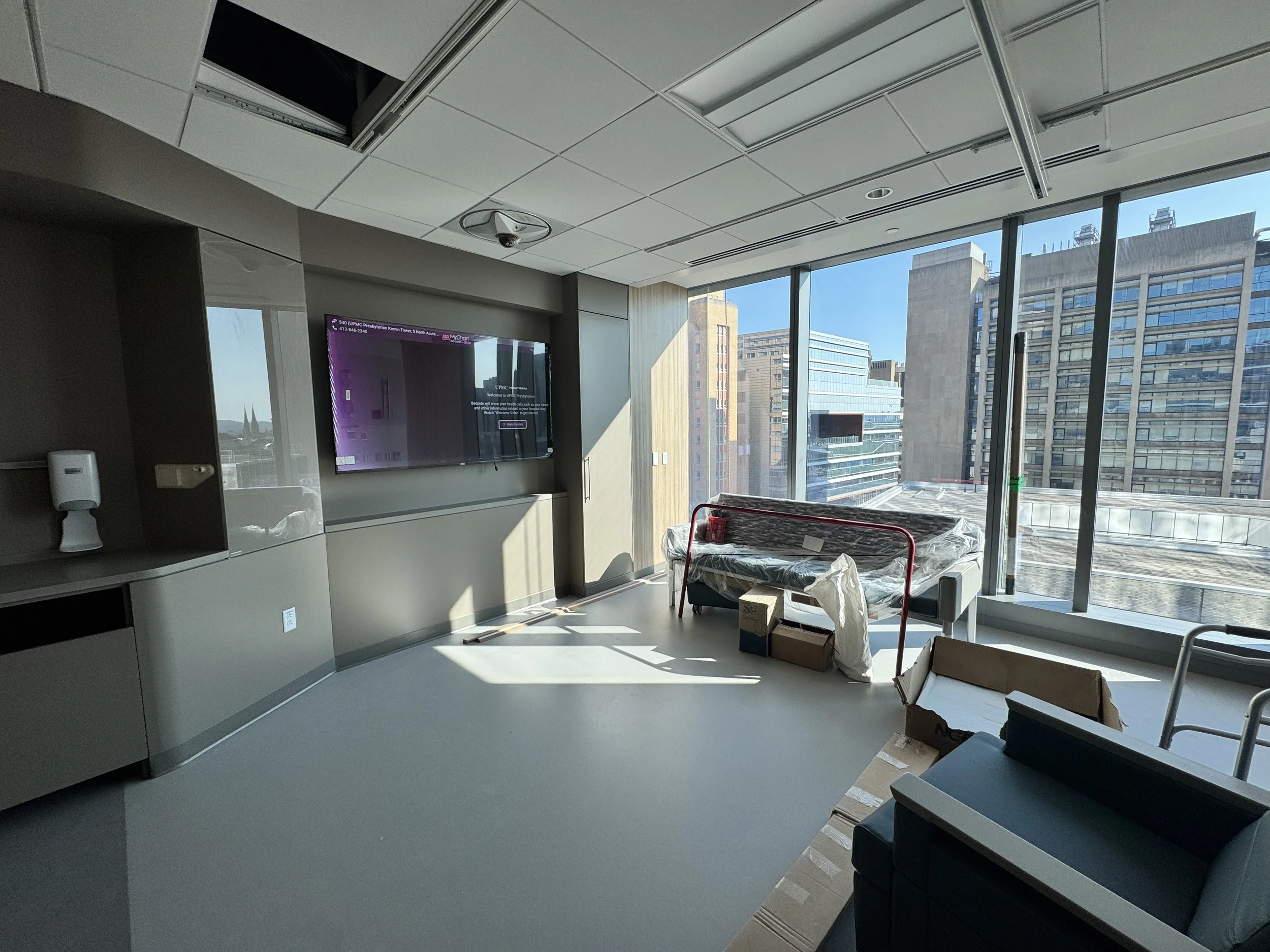
UPMC Presbyterian Kamin Tower
Electrical Contractor: Lighthouse Electric Company
Project Type: Healthcare
Location: Pittsburgh, PA
Completion: Estimated November 2026
PROJECT OVERVIEW
Lighthouse Electric installed the main electrical distribution, emergency power systems, electrical raceways, lighting, power, fire alarm systems, and temporary power needed during construction.
Together, these systems provide the reliable electrical infrastructure that will support patient care, medical technology, building operations, and life safety throughout the new hospital tower.
WHAT THE ELECTRICAL WORK SUPPORTED
The UPMC Presbyterian Kamin Tower expands access to advanced healthcare while strengthening Pittsburgh's role as a nationally recognized center for medicine, research, and education. The facility is designed to improve patient outcomes by supporting innovative models of care that reduce patient transfers and promote continuity of care throughout recovery.
Beyond patient care, the project includes public gathering spaces, landscaped areas, improved wayfinding, and parking improvements that enhance the experience for patients, families, visitors, and the surrounding Oakland community.
COMMUNITY IMPACT
The UPMC Presbyterian Kamin Tower is a new 17-story, 900,000-square-foot expansion that will serve as a state-of-the-art destination for advanced patient care in Pittsburgh's Oakland neighborhood. The facility includes 636 private patient rooms and supports nationally ranked specialties including transplant, heart and vascular, and neurological care.
Designed with a focus on patient experience, operational efficiency, and innovation, the tower incorporates advanced technology, natural light, outdoor healing spaces, rooftop gardens, and community-focused amenities. The project also complements the existing UPMC campus while transforming the Oakland skyline.
COOL FACT
The tower houses a state-of-the-art Interventional MRI Suite (iMRIS) featuring an 8,000-pound MRI magnetmounted on an overhead rail system that travels between two neurosurgery operating rooms, allowing surgeons to capture advanced imaging without moving the patient.